
Vikas Swarup says India unlikely to give Pathankot-like offer to Pak in Uri attack probe.

An old fighter pilot remembers the best days of his life.
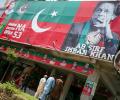
'He will be constrained if and when he tries to set the foreign policy agenda that is not to the liking of the army.'

Taking exception to Health Minister Harsh Vardhan not mentioning the death of healthcare workers due to Covid-19 in his statement in Parliament, the Indian Medical Association has published a list of 382 doctors who died due to the viral disease and demanded that they be treated as "martyrs".

'I want to be murdered at your hands, so I can live on in history. The verdict of who is or is not a traitor cannot be pronounced by a secret agency, but by history.' Pakistani journalist Hamid Mir, who survived an assassination attempt on April 19, challenges his enemies to dub him a traitor and says nothing will stop him from exposing them.

'Pakistan's recent utterances and tendency to use pinpricks to try our patience appear reminiscent of 1965. We are a strong nation, emerging stronger,' says Lieutenant General Syed Ata Hasnain (retd).
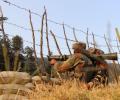
'India has to understand that the permanent state of war that exists between India and Pakistan has to be expected,,' says Colonel Anil A Athale (retd). 'The only way to ensure peace or absence of war is to maintain a militarily-dominant position over Pakistan.'

If you don't have power in a game you are masters of, the world will walk all over you, notes Shekhar Gupta.

A new West Asia is emerging and India must engage at the highest level and help shape this change, says Saeed Naqvi

'Indira Gandhi and P N Haksar did not want Pakistan to leave as an embittered foe hell-bent on taking revenge for being humiliated so comprehensively.'

In 1954, a bench of eight Supreme Court judges declared that the Constitution-makers did not recognise the Fundamental Right to Privacy. It is hoped that a larger bench as and when constituted will uphold the Right to Privacy as a Fundamental Right overruling the 1954 decision, says the distinguished lawyer, P P Rao.

'The biggest advantage for India was its seasoned and experienced political leadership who had spent decades struggling against the Raj and had spent years behind bars.' 'Not a single prominent leader of the Muslim League spent one day in jail.' 'Gandhiji, Nehru and Sardar Patel were intelligent, shrewd men with their hands on the popular pulse.'

'Pakistan is full of 'religious entrepreneurs' like Hafeez Saeed who poison the minds of the young so that they can be motivated to become terrorists. They work in concert with the rulers of Pakistan. It is a private-public partnership.'
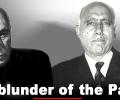
Nehru's sentimental attachment to the Mountbattens deeply vitiated the Kashmir issue. It was certainly the most important factor for the failure to find a solution in the first years of the conflict.

Filmmaker Prakash Jha opens up about his life.
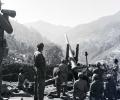
Fifty years ago, India and Pakistan fought a short but bloody war. The author finds out how Sainik Samachar, the defence ministry's journal, reported it.
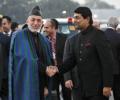
As the western forces prepare to leave Afghanistan in the coming year, India stands at a crossroads where it remains keen to preserve its interests in Afghanistan but has refused to step up its role as a regional security provider. New Delhi needs to recognise that there is no short-cut to major power status, says Harsh V Pant
